

Description
Duration 9:30min (in 6 movements)
---------------------------
PROGRAM NOTES
NB - This suite of short pieces includes Preparatory Exercises for all parts with teaching opportunities for young or less experienced musicians.
Megafauna lived in Australia during the Ice Age (Pleistocene Epoch) and became extinct around 46,000-40,000 years ago.
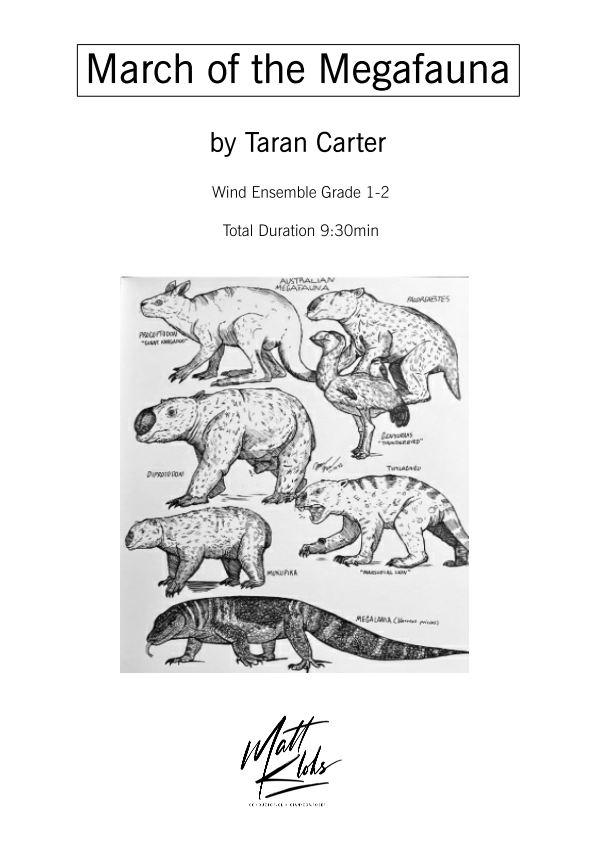
March of the Megafauna is a musical characterisation of six Australian megafauna species:
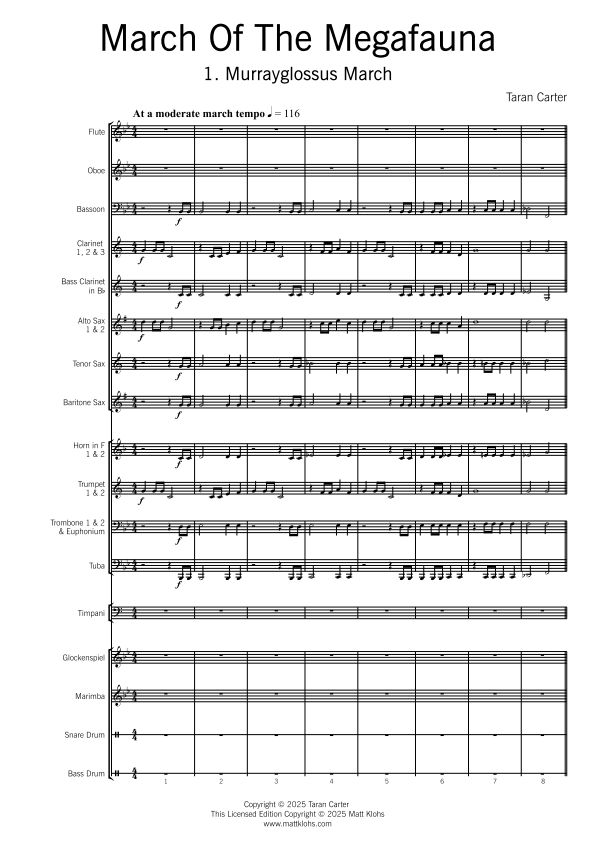
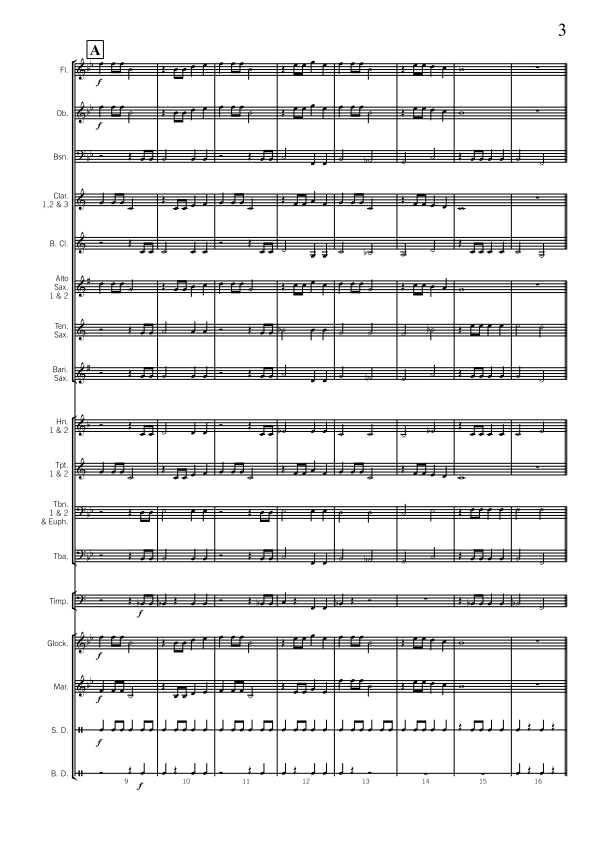
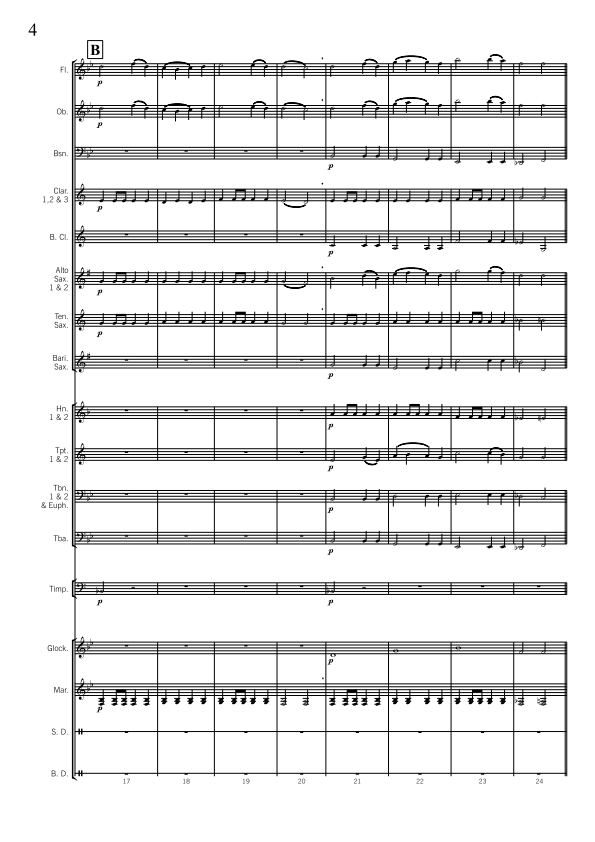
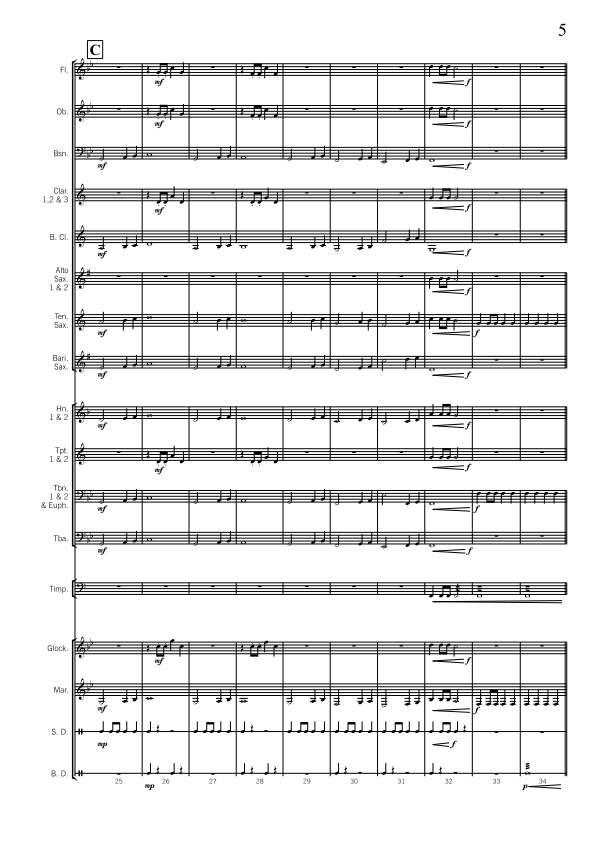
1. Murrayglossus March: (mur-ree-GLOSS-us)
Murrayglossus is an extinct echidna from Western Australia. It is estimated to have been about one metre long and about 30 kilograms in weight, which makes it the largest monotreme known to have ever lived. The music to Murrayglossus March depicts the giant echidna’s stately movements, including a low melody, portraying the Murrayglossus foraging for ants and other insects.
2. Diprotodon Stomp: (die-PRO-toe-don)
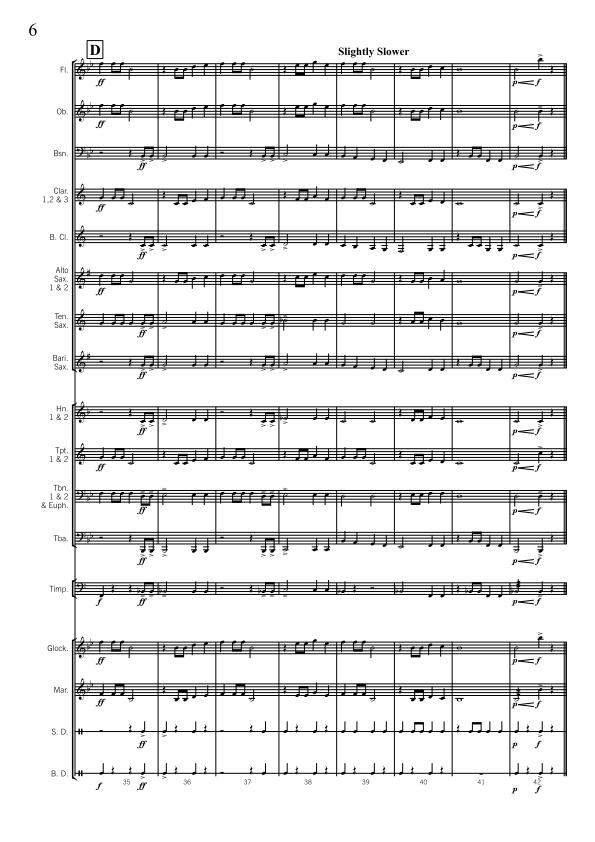
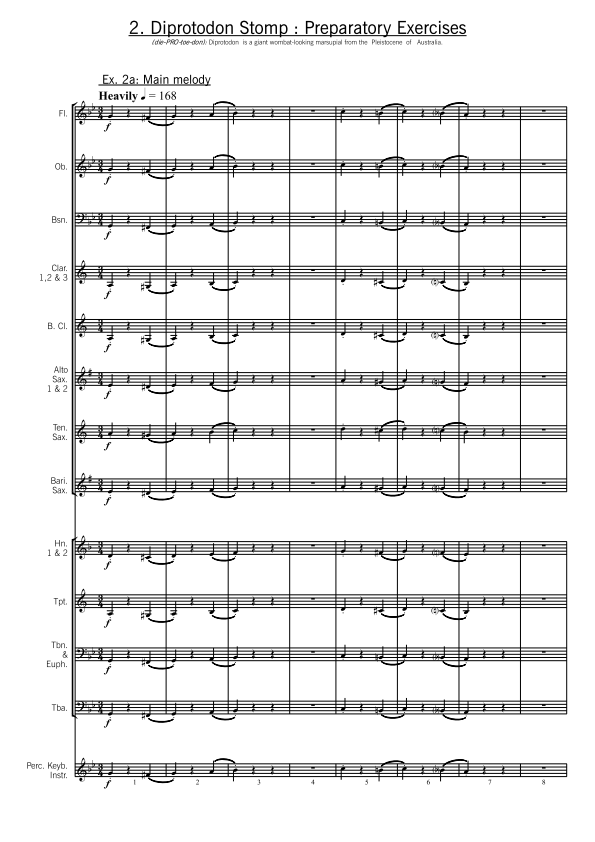
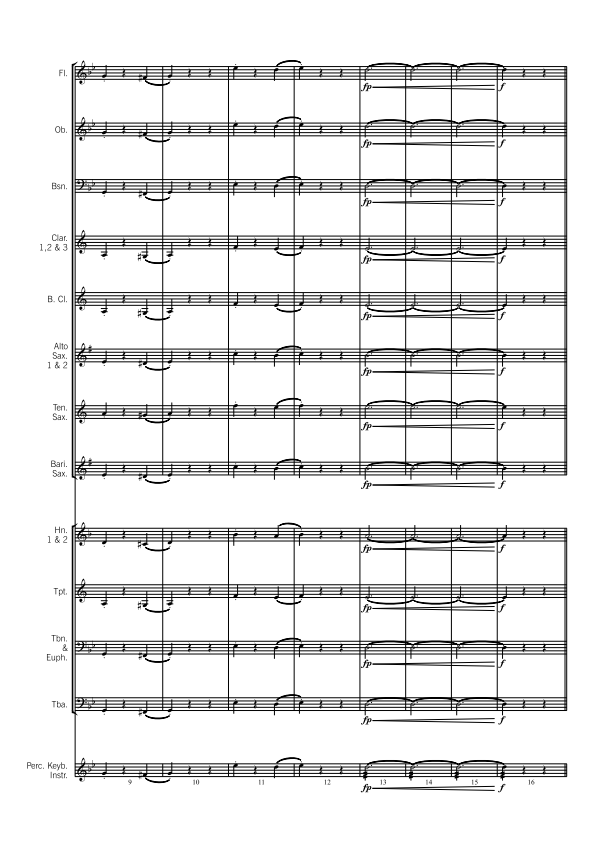
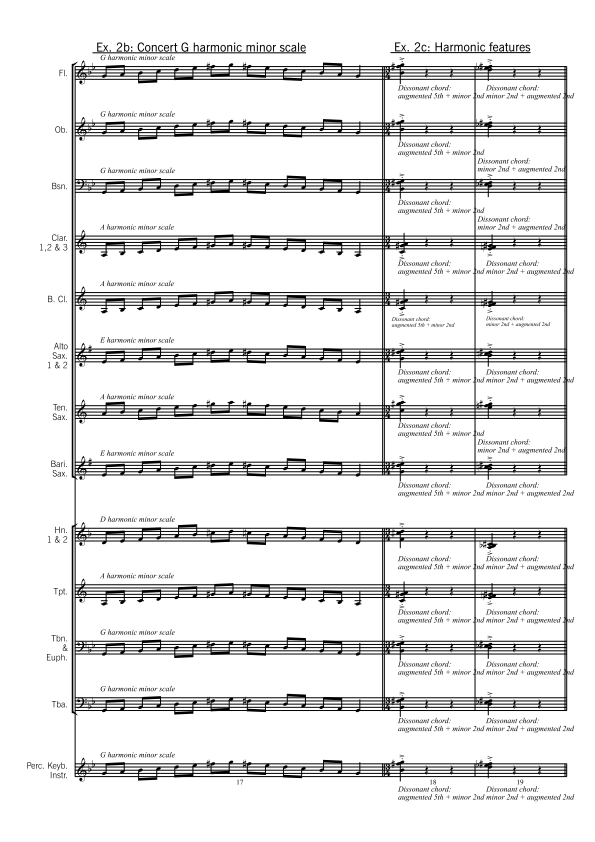
Diprotodon is the largest known marsupial to have ever lived. It greatly exceeds the size of its closest living relatives, wombats and koalas. It grew as large as a small 4WD car (1.8 metres at the shoulders, over four metres from head to tail, and possibly weighed almost 3,500 kilograms.) The music to Diprotodon Stomp characterises the size of these giant wombats via a low-pitched lopsided melody and includes the sound of snorting and huffing as the diprotodon begins its day.
3. Thylacoleo Chase: (thy-LAK-o-LEE-oh)
Thylacoleo is an extinct genus of marsupial lions. Some of these carnivores were the largest mammalian predators in Australia of their time, with Thylacoleo carnifex approaching the weight of a lioness. As the title suggests, this piece musically describes being hunted and chased by a Thylacoleo—a truly terrifying prospect. Does the Thylacoleo in this music capture its human prey? That’s up to the listener to decide.
4. Procoptodon Bounce: (Pro-COP-toe-don)
Procoptodon is an extinct genus of giant short-faced kangaroo. Procoptodon goliah, the largest known kangaroo species that ever existed, stood at about two metres and weighed about 200–240 kilograms. The playful nature of this work, built on a 6/8 rhythm, depicts the bounce of these gentle giant kangaroos.
5. Genyornis Waltz (Thunder Bird Waltz): (jen-ee-OR-niss)
Genyornis newtoni, also known as Newton's Thunder Bird, is an extinct species of large, flightless bird. The first section of this music uses chromaticism and waltz rhythms to musically describe a large, clumsy bird moving through the Australian bush, while the middle section portrays the thunder and danger of this creature.
6. Meiolania Majestica: (my-oh-LAN-e-ah)
Meiolania was a large turtle, with the shell alone ranging from 0.7–2 metres in length. The character of Meiolania Majestica depicts the majestic nature of a giant turtle, and, as the final movement in the March of the Megafauna collection, honours the grandeur, size and wonder of these six magnificent Australian megafauna.
Each march is composed to include specific teaching points and the movements are progressive in difficulty. This suite is a suitable for a year's learning for your Grade 1 wind ensemble.
Instrumentation
Flute, Oboe, Bassoon, Bb Clarinet 1 2 3, Bass Clarinet, Alto Sax 1 2, Tenor Sax, Baritone Sax, Horn in F 1 2, Bb Trumpet 1 2, Trombone 1 2, Euphonium (BC & TC), Tuba, Timpani, Glockenspiel, Marimba, Xylophone, Vibraphone, Snare Drum, Bass Drum, 2 Woodblocks, Tom-toms, Tam-tam, Suspended Cymbal