


Description
Duration 6:30 min
---------------------------
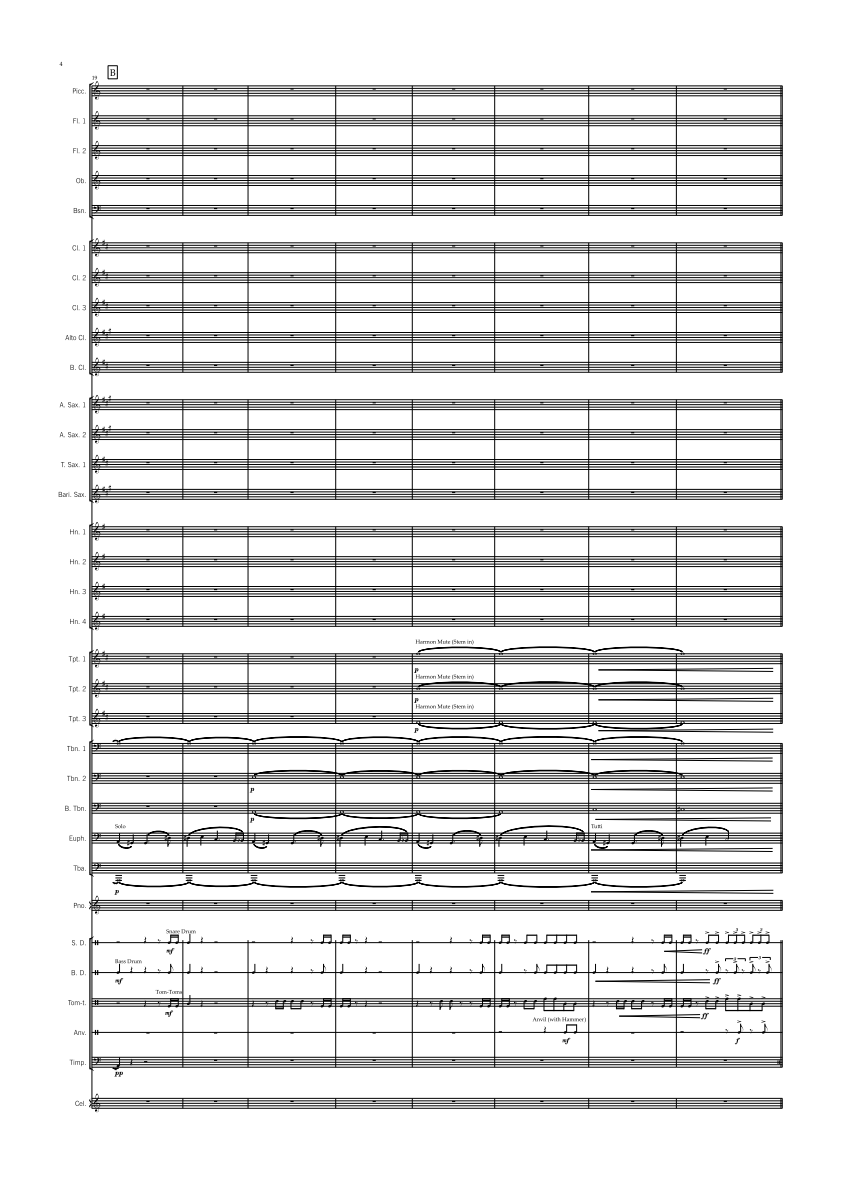
Diamonds Rising by Liam Booth is inspired by the saying “Pressure makes diamonds". The piece explores both the literal process of diamond formation under immense heat and pressure, as well as the idea that adversity and hardship can reveal inner strength and potential.
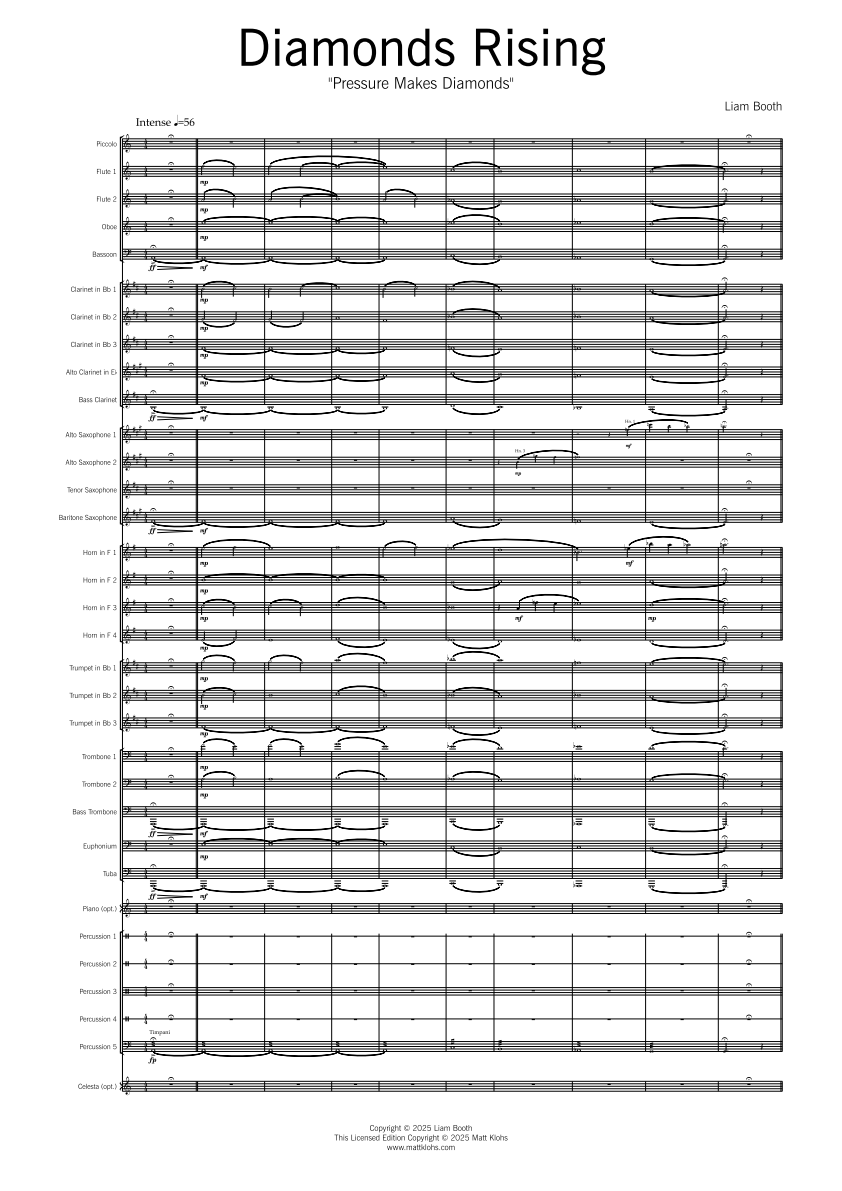
The music begins with dark, suspenseful, and dissonant chords, evoking the intense pressure deep beneath the Earth's surface.
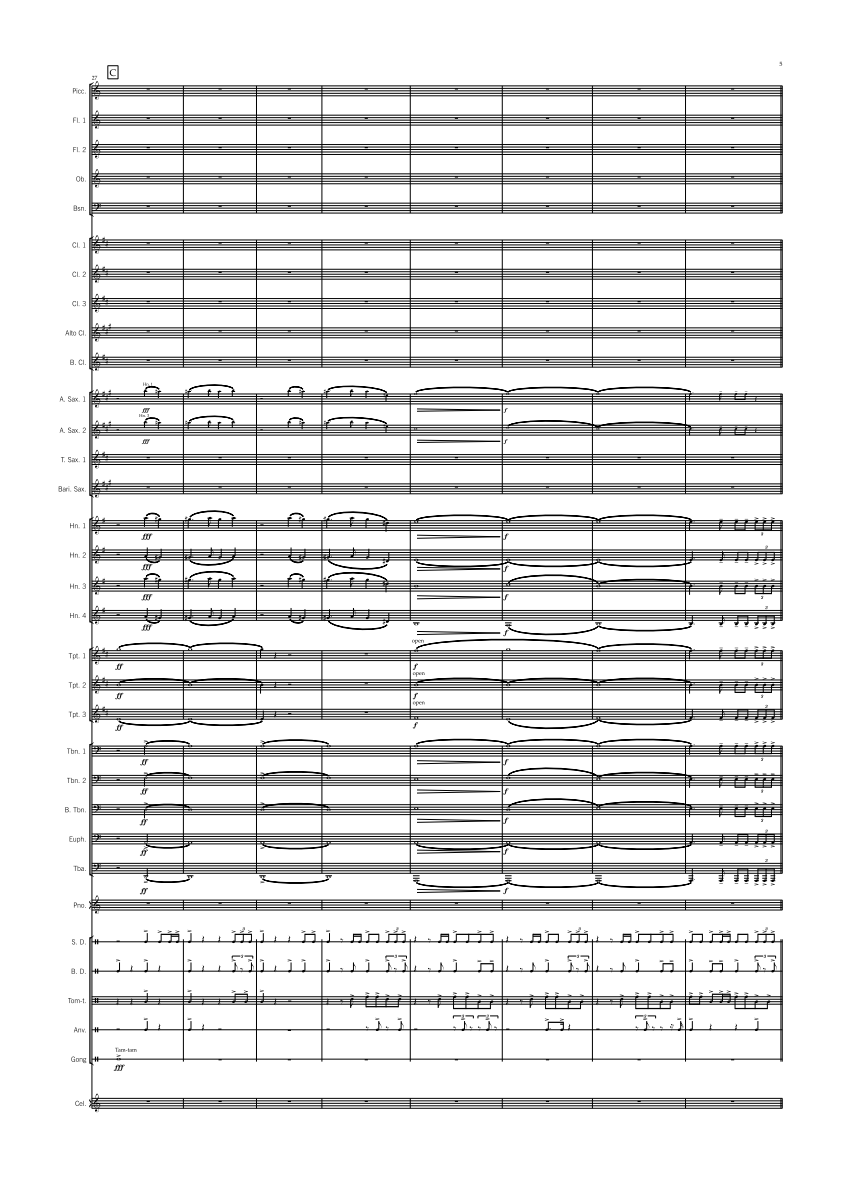
A dark motif built on semitonal intervals, creating tension and release is introduced in the lower brass. This motif is passed between voices, beginning in the bass trombone, featuring as a Euphonium solo and appearing in fragmented form in the horns. The percussion gradually builds momentum, featuring an anvil—symbolising the labour of miners searching for diamonds and enhancing the atmosphere of pressure.
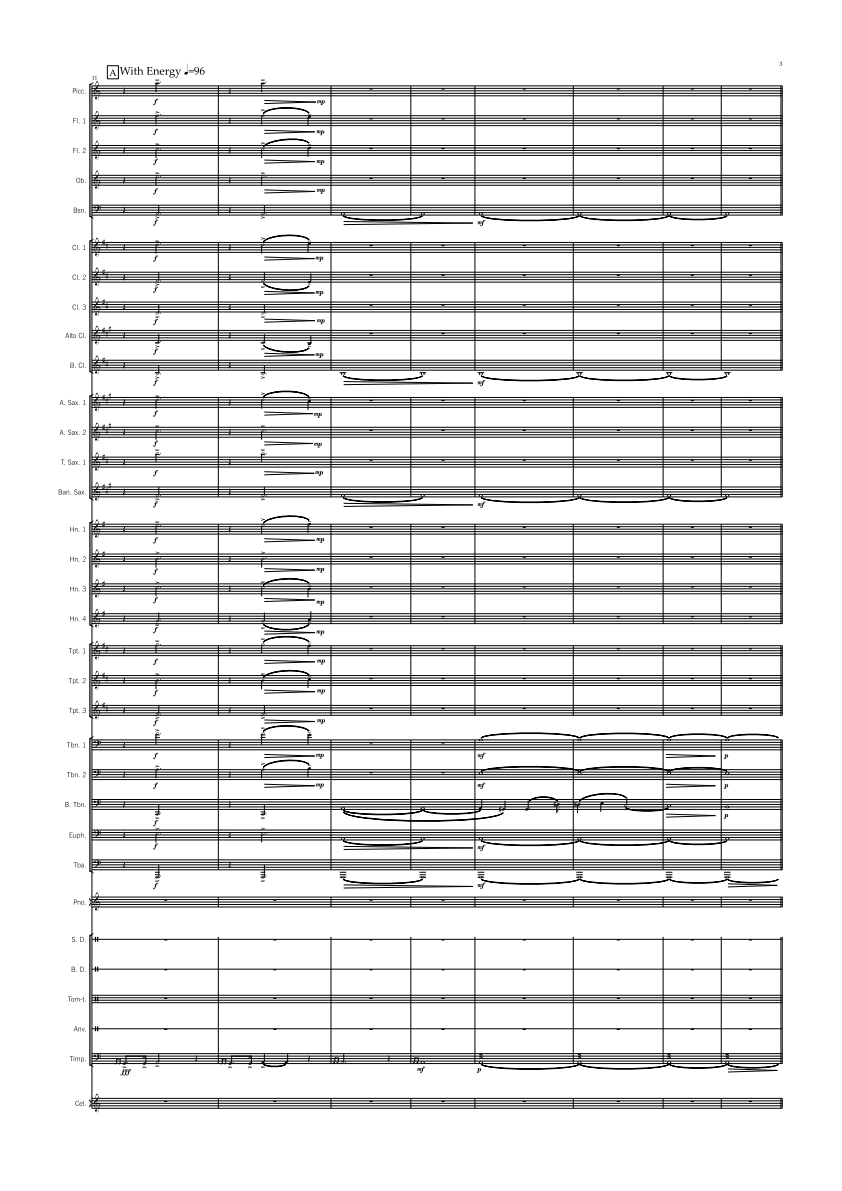
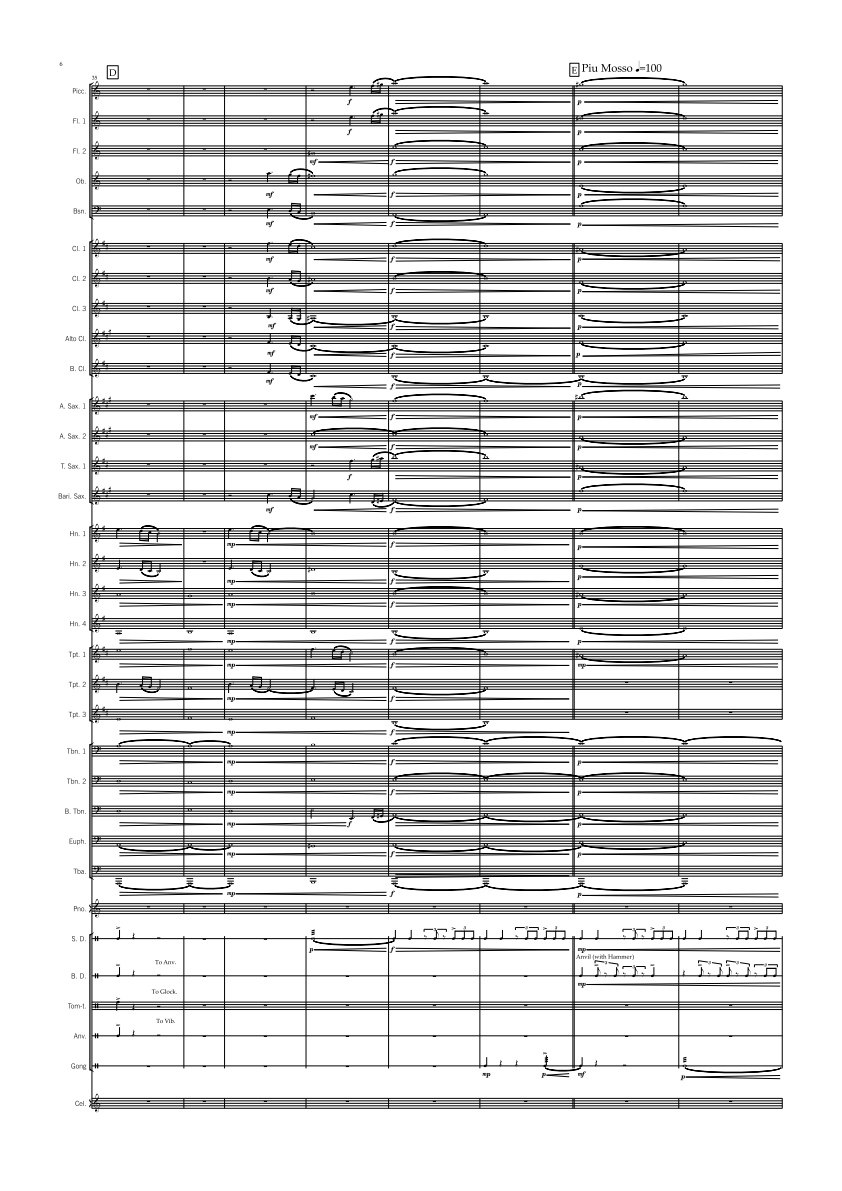
Following a brief return to the dark chordal material, a driving woodwind ostinato emerges, pushing the music forward. This section intensifies as the original motif reappears in the lower brass, alongside a woodwind ostinato that outlines and supports the introduction of a new melodic idea in the saxes. This section transitions the piece into a contrasting slow section marked by extended fermatas, representing the diamond reaching full formation. Here, the motif is carried by the flutes and adorned with delicate glockenspiel arpeggios.
The return of the woodwind ostinato leads into a bright, shimmering section depicting the diamond sparkling in the light after its discovery. This section features the new ideas introduced by the saxes in the previous section. Flourishes in the woodwinds, glockenspiel, piano, and celeste enhance the glistening texture.
While the celeste is optional, its bell-like tone is highly recommended to enrich the texture. The sextuplet figures that evolve from the flourishes at the end of this passage help transition into the final grand section.
The concluding section features bold brass chords and continued woodwind flourishes. A fragment of the original motif reappears in the trumpets, reflecting on the intense journey of transformation. The final note should be held strictly to its written value (a crotchet), allowing the suspended cymbal, wind chimes, and mallet percussion to naturally fade out, leaving the audience with the essence of sparkling diamonds.
Instrumentation
Piccolo, Flute 1 2, Oboe, Bassoon, Bb Clarinet 1 2 3, Eb Alto Clarinet, Bb Bass Clarinet,
Eb Alto Saxophone 1 2, Bb Tenor Saxophone, Eb Baritone Saxophone,
Bb Trumpet 1 2 3, F Horn 1 2 3 4, Trombone 1 2, Bass Trombone, Euphonium, Tuba
Piano (opt.), Celeste (opt.)
Percussion 1 – Snare Drum, Suspended Cymbal
Percussion 2 – Bass Drum, Anvil, Wind chimes, Suspended Cymbal, Tam-tam
Percussion 3 – Tom-toms, Glockenspiel
Percussion 4 – Anvil, Tam-tam, Vibraphone
Percussion 5 – Timpani, Tam-tam, Wind Chimes, Bass Drum